Australia has added its name to a 22‑nation statement pledging “appropriate efforts” to safeguard shipping through the Strait of Hormuz, even as the Albanese government reiterates it will not send naval vessels to the region.
The joint declaration, originally issued on March 19 by the United Kingdom, France, Germany, Italy, the Netherlands, Japan and Canada, condemns Iran’s attacks on commercial shipping and the “de facto closure” of the strategic waterway. On Sunday, the list of endorsing countries was expanded to include Australia, New Zealand, Estonia, Romania, Sweden, Norway, Bahrain and the United Arab Emirates.
The Strait of Hormuz handles roughly one‑fifth of the world’s oil trade, making any disruption a flashpoint for global energy markets.
Citing United Nations Security Council Resolution 2817, the statement says that interference with international shipping and energy supply chains “constitute a threat to international peace and security”. It calls for a moratorium on attacks against civilian infrastructure, including oil and gas facilities.
“We express our readiness to contribute to appropriate efforts to ensure safe passage through the Strait,” the statement reads. “We welcome the commitment of nations who are engaging in preparatory planning.”
The signatories also voiced support for a coordinated release of strategic petroleum reserves authorised by the International Energy Agency, and said they would take further steps to stabilise energy markets.
Australia’s stance: support without warships
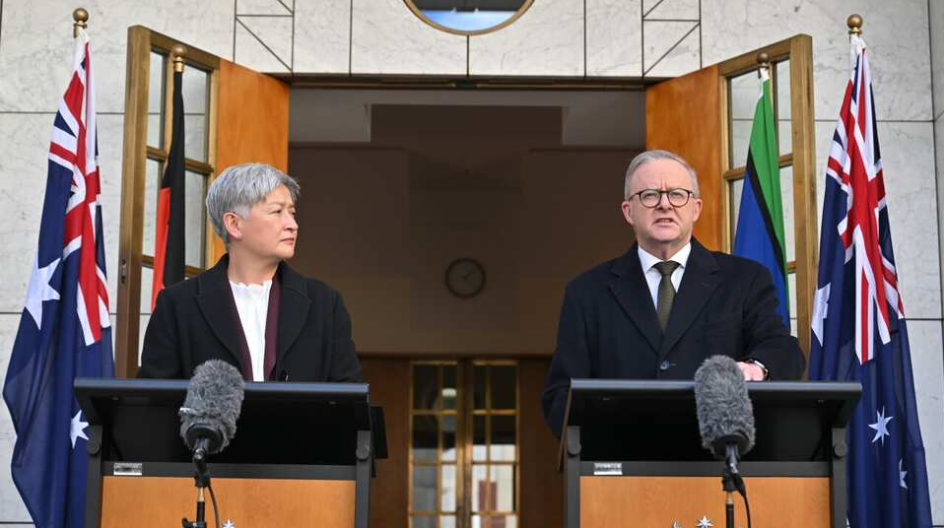
Despite joining the diplomatic front, Australia has drawn a clear line on its military role. Defence Minister Richard Marles said last week that Canberra had not received a request from the United States to send a ship, adding, “We’re not contemplating sending a ship.”
Transport Minister Catherine King reinforced that position, telling ABC Radio National: “We won’t be sending a ship to the Strait of Hormuz.” She noted that Australia’s contribution so far has been to provide aircraft support to the United Arab Emirates, where a significant number of Australians are based.
US pressure on allies
The stance has drawn scrutiny from Washington. US President Donald Trump, who has been pressing allied nations to step up defensive efforts in the strait, told Sky News over the weekend that he was “very surprised” by Australia’s decision not to deploy troops.
“I was a little bit surprised they said no … we always say yes to them,” Mr Trump said, adding that he would like Australia, Japan and South Korea to “get involved”.
The push for greater allied engagement comes amid escalating tensions. The US and Israel launched a surprise military campaign against Iran three weeks ago, and Iran has reportedly fired missiles toward US‑UK military installations in the Chagos Islands—the farthest such attack by the Islamic Republic to date.
With global energy markets on edge and diplomatic efforts intensifying, Australia finds itself balancing its commitment to maritime security with a cautious approach to direct military entanglement in the Middle East.